

At the Iowa State Fair, the topic of pork takes center stage as eager visitors enjoy barbecue while intrigued children marvel at the largest pig in the state.
However, the 11-day event in Des Moines also serves as a key platform for Canadians to advocate for their interests amid the ongoing tensions in the Canada-U.S. relationship.
“It’s important to remind Iowans that this relationship brings significant benefits to them,” remarked Rick Prejet, the chair of Manitoba Pork, during the state fair on Friday.
Prejet, along with Cam Dahl, the general manager of Manitoba Pork, was part of a Canadian delegation from Manitoba that engaged with local politicians and industry representatives, including members of the Iowa Pork Producers Association.
“We are delivering our message directly to our key stakeholders,” stated Richard Madan, Manitoba’s senior representative in the U.S.
“Building relationships through face-to-face interactions is crucial for enhancing trust and understanding.”
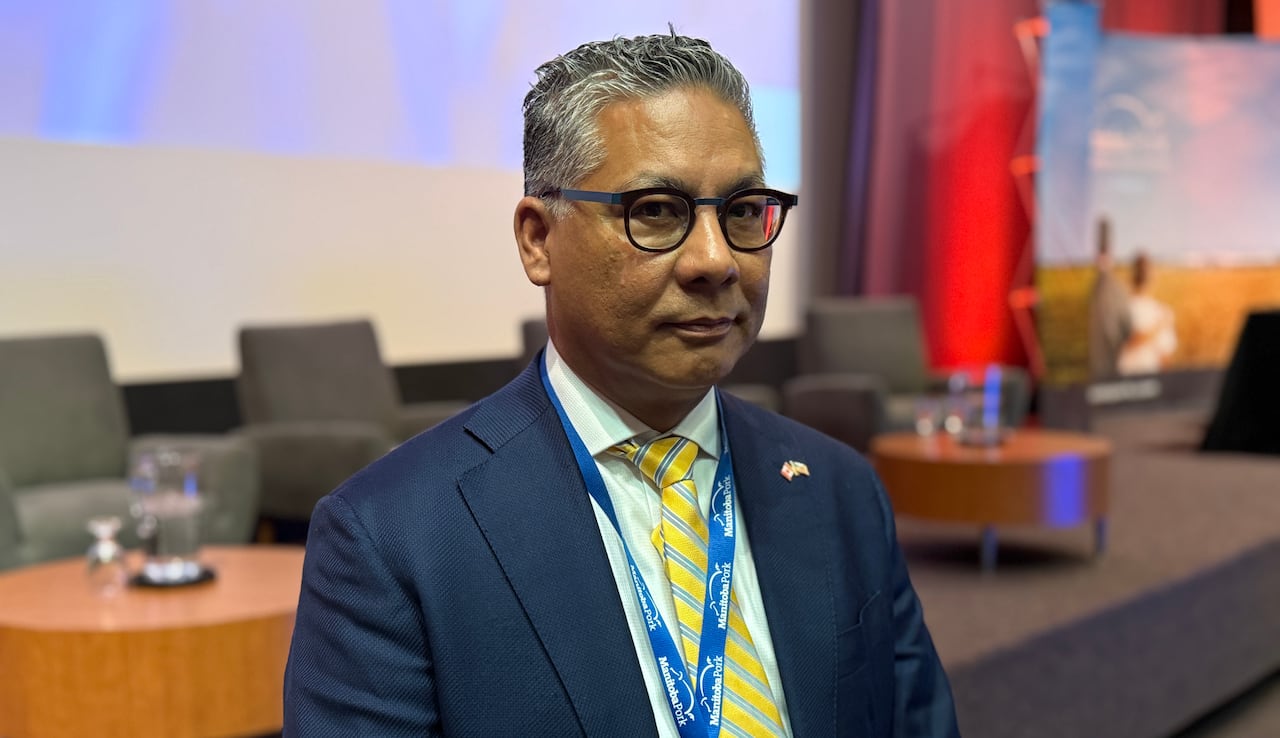
Richard Madan, previously a White House correspondent for CTV and CBC, serves as Manitoba’s senior representative in the U.S. (Trevor Brine/CBC)
Mark Wiseman, Canada’s Ambassador to the United States, participated in the traditional pork chop flip—successfully achieving it on his second attempt—and posed for pictures with the Iowa Pork Queen on Saturday.
Also present were Agriculture Minister Heath MacDonald, Minneapolis Consul General Beth Richardson, and representatives from Quebec and Alberta.
While Manitoba Pork has routinely attended the state fair, this year carries heightened significance due to U.S. President Donald Trump’s threats of imposing new tariffs on a variety of Canadian goods.
The Canadian government has ramped up talks in Washington to seek a resolution to the 50 percent tariffs scheduled to begin Wednesday.
Annually, Manitoba exports over three million young pigs to the United States, with approximately two million of those going directly to Iowa.
“We’re not forcing those pigs into the market; there’s a strong demand for them,” Prejet explained. “It’s essential to remind everyone of the value of our partnership.”
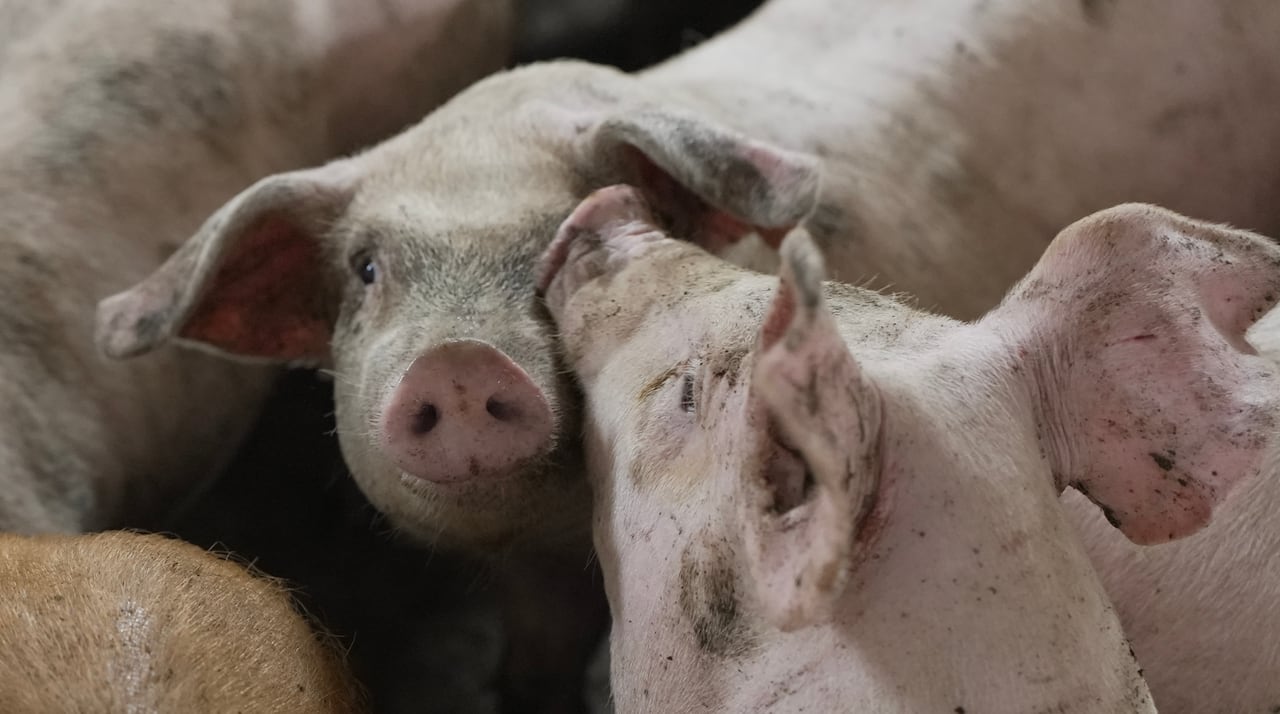
Manitoba exports millions of live pigs to the U.S. each year. (Tyson Koschik/CBC)
While trade discussions taking place in the U.S. Capitol are vital, engaging in state-level diplomacy might help garner Canadian support beyond federal circles.
Madan stated that the delegation fostered connections and received candid feedback on pressing matters. They interacted with lawmakers, regulatory officials, the local mayor, and state leaders, and conducted meetings with the U.S. Department of Agriculture, Iowa’s secretary of agriculture, and the head of the farm bureau, among others.
The Iowa State Fair is recognized as a political hub, where both local and federal politicians routinely address voters from the “soap box” at the event.
High-profile figures from the Trump administration, such as United States Trade Representative Jamieson Greer and U.S. Small Business Administrator Kelly Loeffler, were also spotted on the fairgrounds last week.
In conversations with local media and fair attendees, Greer defended Trump’s unpredictable tariff strategies, which have posed significant challenges for the agriculture-focused state.
A group of farmers at the fair on Friday discussed how Iowa’s soybean exports have suffered due to China’s retaliatory tariffs against U.S. goods.
However, when questioned about the impending tariffs on Canada, their responses were more cautious. The farmers indicated that the tariffs were aimed at Canada’s dairy supply management system, which they argued disadvantages U.S. producers, and the trade deficit, primarily attributed to U.S. imports of Canadian oil.
Canada ranks as Iowa’s largest customer, with the state exporting $4.9 billion USD to its northern neighbor in 2025, which constitutes 30 percent of Iowa’s total exports.

Visitors at the Iowa State Fair in Des Moines on Saturday. (Kelly Geraldine Malone/The Canadian Press)
Iowa also imports $3.2 billion USD in goods from Canada, a significant portion of which consists of agricultural and machinery products that support the state’s industries relying on the closely integrated North American market.
“To be completely honest, I don’t know much about it,” said 33-year-old Kaitlin Becker regarding Iowa’s relationship with Canada.
Becker’s sentiment is shared by many fairgoers who seemed unaware of the state’s connection with Canada and were hesitant to discuss the current turmoil resulting from Trump’s tariffs and threats of annexation.
Nevertheless, U.S. agricultural and industry representatives who spoke with the Canadian delegation expressed their desire for stability and the preservation of the Canada-U.S.-Mexico Agreement (CUSMA).
Dahl noted, “Support for our trade agreement here is incredibly strong.” While Canadian agriculture has largely avoided Trump’s tariffs thus far, there are ongoing discussions about ensuring that this trend continues.
“It’s well recognized that both sides benefit. Producers gain, processors gain, and consumers gain,” Dahl stated.
“If that supply chain were disrupted, it would adversely affect everyone involved.”
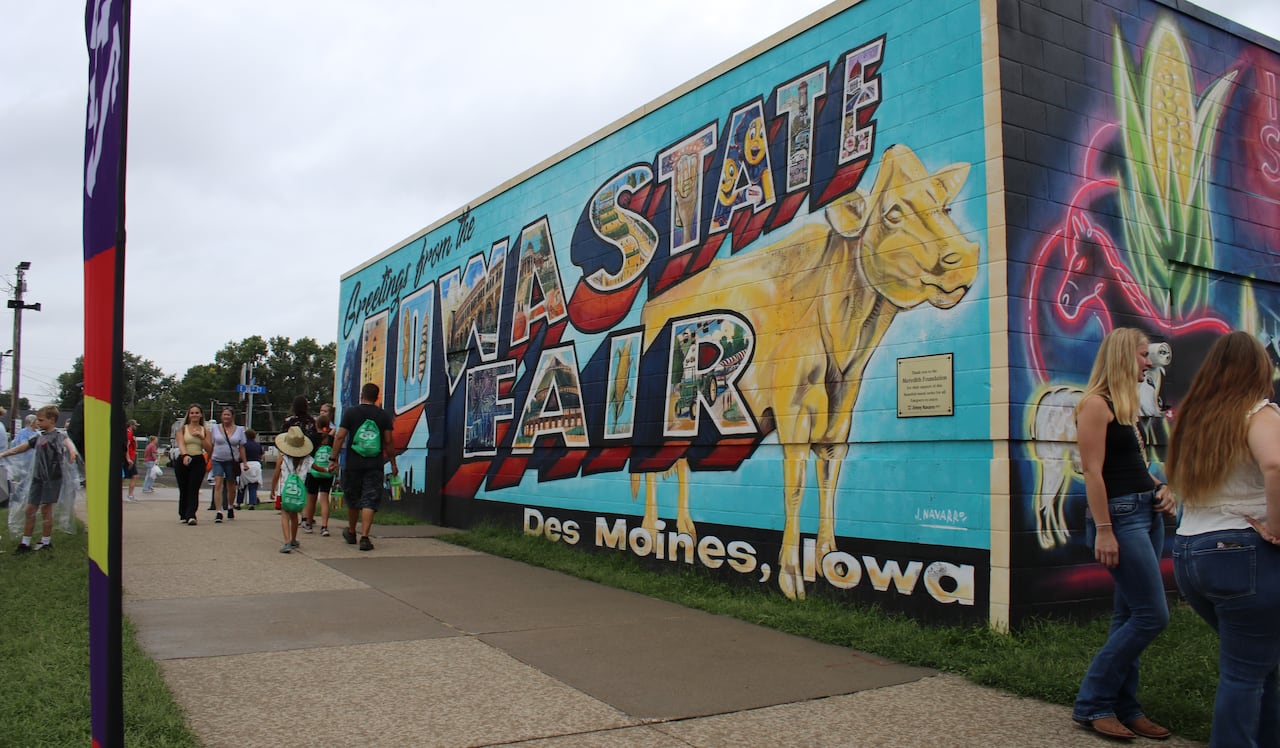
Manitoba Pork has regularly participated in the Iowa State Fair, but the stakes are particularly high this year due to President Trump’s threat of new tariffs on Canadian products. (Kelly Geraldine Malone/The Canadian Press)
The Trump administration did not renew CUSMA in July, initiating an annual rolling review of the trade agreement that may last for up to a decade, at which point it could expire if the three countries fail to agree on an extension.
While Mexico and the U.S. have begun official negotiations regarding CUSMA, discussions between Ottawa and Washington have yet to commence.
Many analysts believe that Trump’s recent tariff threats aim to compel Canada to engage in negotiations.
Victoria Riley expressed her disappointment over the deterioration of the bilateral relationship, stating, “We have been such great neighbors with Canada for a long time.”
She expressed a desire for a return to previous conditions, adding, “When tariffs are imposed, no one wins — we all suffer.”
“The politics in this country are just a mess,” the 69-year-old commented at the fair on Saturday.