

Canada’s highest court has determined that Elections Canada made a significant administrative mistake that could compromise the integrity of the electoral process by neglecting to resolve issues related to mail-in ballots in a Montreal-area riding prior to the 2025 federal election.
The Supreme Court of Canada annulled the election results for the Terrebonne riding in a ruling issued in February and disclosed the rationale for its decision on Friday.
The court stated that its choice to mandate a new election “bolsters public confidence in the electoral process by confirming that a federal election should not hinge on recognized and rectifiable official mistakes,” according to the ruling.
Liberal candidate Tatiana Auguste was declared the victor in the Terrebonne riding, edging out incumbent Bloc Québécois candidate Nathalie Sinclair-Desgagné by a single vote in April 2025.
The Bloc candidate contested the election results and requested a byelection after a Bloc supporter reported that she had attempted to vote by mail using a special ballot which was never counted.
The voter, Emmanuelle Bosse, indicated that her special ballot was returned to her mailbox due to an error in the postal code on a label provided by Elections Canada.
A Superior Court judge denied Sinclair-Desgagné’s plea for a new election; however, the Supreme Court overturned that decision in a divided ruling issued from the bench in February, leading to a byelection that Auguste won on April 13.

After a challenging year, Tatiana Auguste of the Liberals will represent the Quebec riding of Terrebonne in the House of Commons. She won Monday’s byelection by over 700 votes against Nathalie Sinclair-Desgagné of the Bloc Québécois.
Justice Mahmud Jamal, writing for the majority, noted that an employee of Elections Canada had been aware for several weeks that some voters received envelopes with incorrect postal codes, yet the agency did not take corrective action.
The ruling stated, “Elections Canada did not receive or count an elector’s vote because it failed to take adequate measures to rectify the error, even though it was aware of the mistake and expected that affected electors would be contacted by one of its employees.”
“Elections Canada was responsible for causing the error and had both the ability and obligation to correct it.”
The court learned that an Elections Canada employee had dispatched incorrectly addressed envelopes for mail-in ballots to around 40 voters.
He recognized his mistake over three weeks before election day but failed to notify any supervisors. The employee thought the error had not caused any issues “since the Terrebonne polling station was receiving completed special ballots in the usual course, including in envelopes with the postal code error,” the ruling stated.
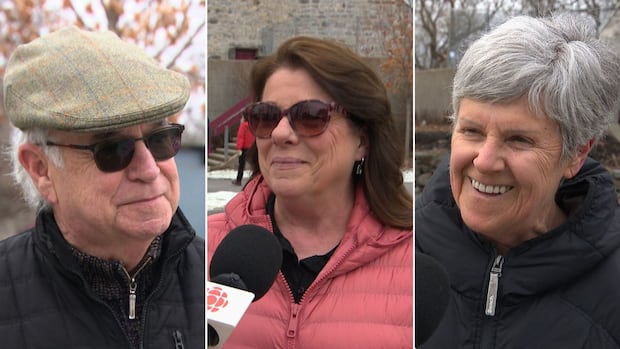
Prime Minister Mark Carney’s Liberals secured the riding outside Montreal by approximately 700 votes in Monday’s byelection. Tatiana Auguste had previously won the riding by a single vote in April 2025, a result later annulled by the Supreme Court of Canada due to an uncounted mail-in ballot.
Jamal stated that the Superior Court was mistaken in its judgment that an inadvertent administrative error was trivial enough to not be classified as a voting irregularity.
“Unintentional, honest, or good faith errors can also jeopardize the integrity of the electoral process if they prevent voters from exercising their right to vote,” the judge remarked.
Elections Canada released a statement indicating that it reviewed its special ballot procedures following the election and has already implemented changes. The agency announced it would thoroughly examine the Supreme Court ruling before determining any further actions.
“Elections Canada is continuously seeking innovative methods to better equip the thousands of workers who facilitate the delivery of federal elections,” the agency stated in a press release.
-
Quebec Liberal leader criticizes the decision to send voter guides in French only in a letter to the premier
-
PQ leader expresses concern over Ottawa’s interference in Quebec elections
-
The Alberta NDP won Calgary’s byelection. However, the electoral map could change significantly for the next election
The ruling was a split decision, with 6 in favor and 3 against.
Justices Andromache Karakatsanis and Sheilah Martin, representing the minority opinion, contended that the clerical error did not rise to a severity level sufficient to warrant a new election.
They also cautioned that this ruling could lead to an increase in challenges.
“If a mistake affecting a single vote is enough to reopen an election result, it is difficult to envision what kind of error would not meet the threshold,” they stated. “Such a low bar would endanger all election outcomes, jeopardizing the stability, certainty, and finality of election results.”
Conversely, the majority maintained that the standards for overturning an election remain rigorous, and the decision will not “open floodgates” to electoral disputes for every error made during an election.