

In 2009, while studying at McMaster University, Shaiya Robinson encountered a sight that was new to her—a Black woman spearheading a cancer research laboratory. This was her first meeting with Juliet Daniel during an interview.
Having seldom seen Black faculty members, Robinson felt that the opportunity to join the lab represented more than just an interview; it was a moment that allowed her to envision herself in such a role for the first time.
“I had never had a Black professor before,” she expressed.
Daniel went on to become Robinson’s supervisor, mentor, and eventually, a peer.
Currently, Robinson serves as an assistant professor at McMaster, continuing to impart many of the insights she gained from the woman who played a significant role in shaping her future.
On Monday, Robinson joined former students, friends, and colleagues at McMaster University to pay tribute to Daniel’s legacy. The Barbadian-Canadian scientist and breast cancer survivor passed away on April 28 at the age of 61.
“She was instrumental in every aspect of my career and personal development,” Robinson reminisced.
Committed to Exploring New Questions
Daniel became part of McMaster in November 1999, making history as the first Black woman to be a faculty member in the university’s faculty of science.
Her research concentrated on uncovering the reasons behind the varying impacts of certain cancers on different populations and the disparities in outcomes.
She gained international acclaim for her studies on triple-negative breast cancer (TNBC), an aggressive cancer type that disproportionately affects Black and Hispanic women.
Her findings contributed significantly to the understanding of genetic factors influencing cancer outcomes, including her identification of a gene she named Kaiso, inspired by a style of calypso music that reflects her Caribbean roots.
Michele James, who had known Daniel for approximately three decades and is a board member of The Olive Branch of Hope (TOBOH), a breast cancer support group, highlighted that Daniel was advocating for health equity and addressing healthcare inequities long before these topics gained widespread attention.
“She was truly a pioneer in this area,” James noted.
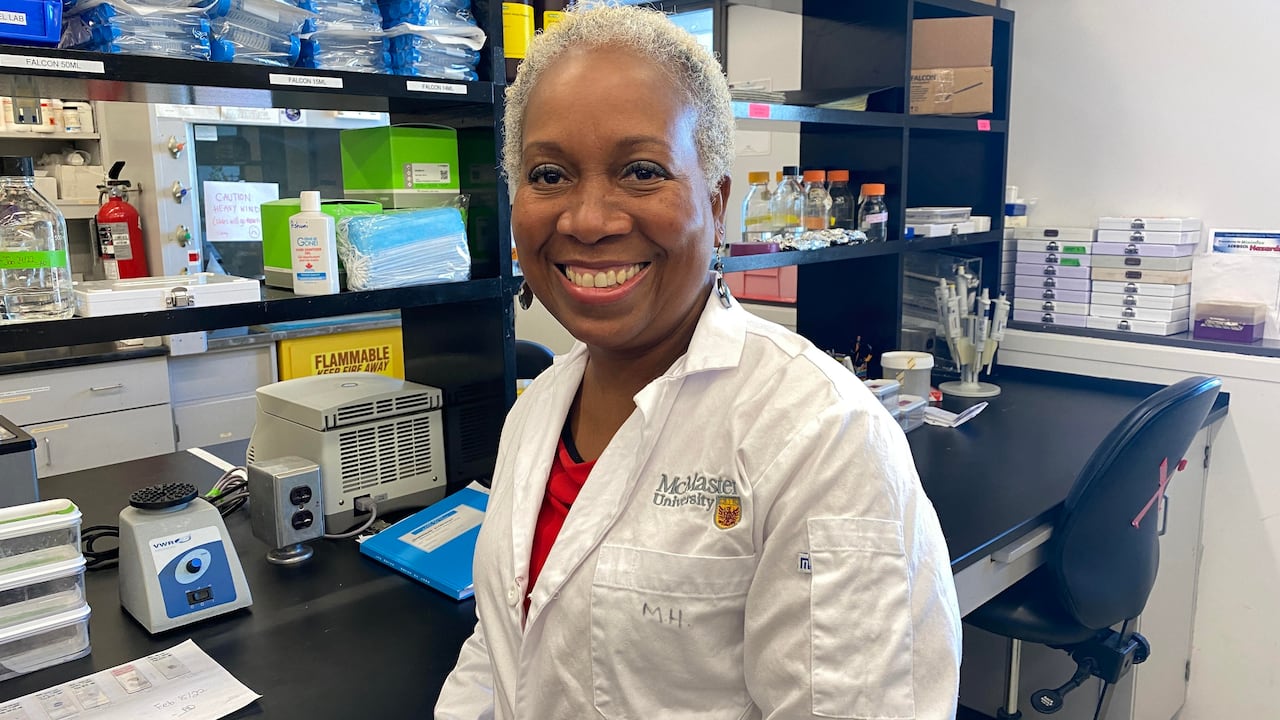
Daniel was a co-founder of several organizations, including the African Caribbean Faculty Association of McMaster, the Canadian Black Scientists Network, the McMaster Academic Women’s Success and Mentorship Lecture Series, and the Canadian Multicultural LEAD Organization for Mentoring and Training. (Paul Smith/CBC)
Always Available for Students and the Community
Robinson shared that despite Daniel’s busy schedule, she consistently made students and colleagues feel valued and fully heard.
“She had a packed agenda, but she always made you feel like you were a priority,” Robinson said.
Daniel also served as a mentor to Kevin Kelly, who now works in the field of biotechnology.
Kelly first met Daniel in 2000 while searching for a research supervisor during his undergraduate studies. He remained in her lab throughout his PhD, becoming her first doctoral graduate.
Kelly remarked that Daniel took her mentoring role earnestly and was generous with her time.
“She was always considering her students’ needs,” he said.
He admired her determination to explore questions that received little scientific focus, especially concerning cancer in Black women.
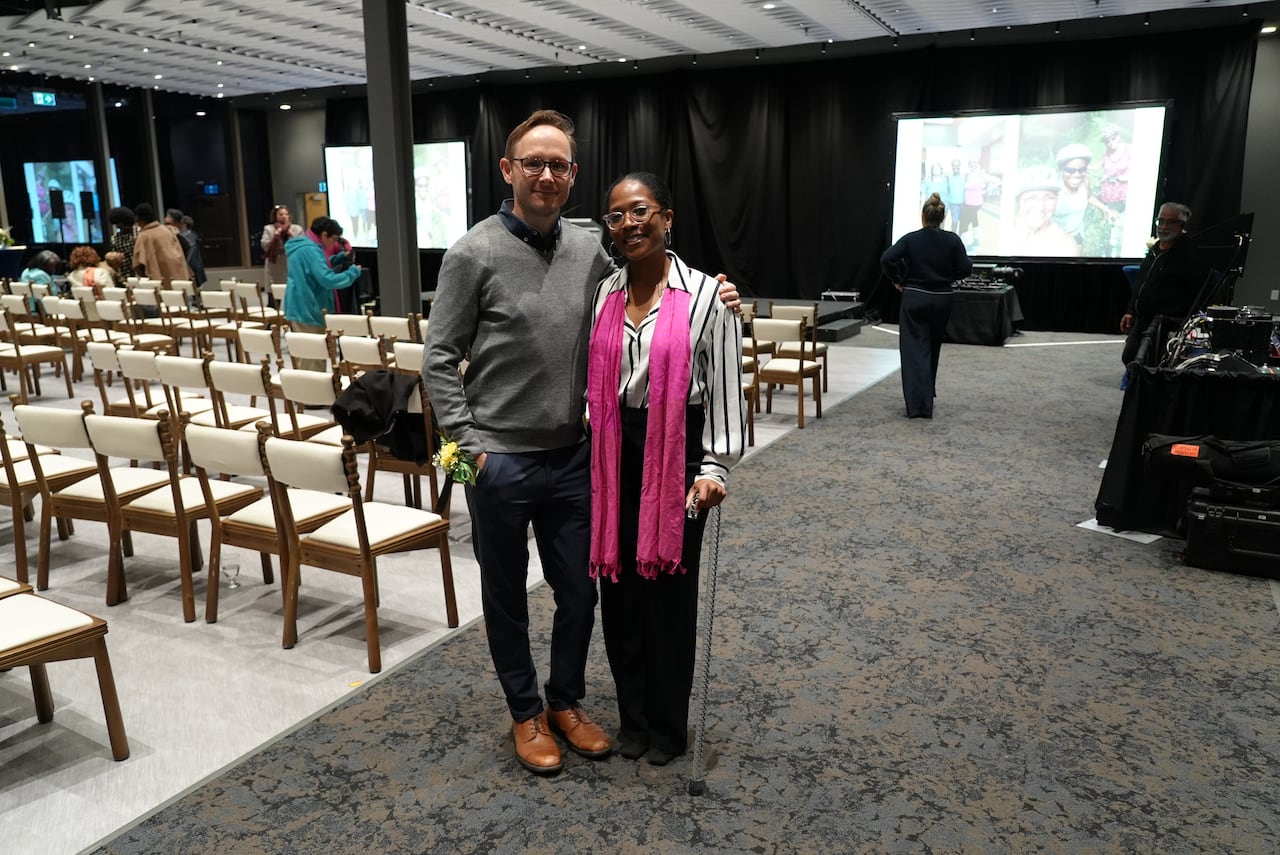
Kevin Kelly and Dr. Shaiya Robinson, left to right, were both mentored by Daniel. They fondly remember her for her scientific achievements and compassionate mentoring approach. (Jeffery Tram/CBC)
Daniel played a pivotal role in fostering a more robust community for Black academics. She co-founded the African Caribbean Faculty Association of McMaster and the Canadian Black Scientists Network, along with several initiatives aimed at promoting mentorship, inclusion, and student success.
“I admired her courage in taking on that additional responsibility,” James commented. “Despite her already full schedule, she dedicated herself to advancing opportunities not just for herself, but for her colleagues as well.”
Proud of Her Bajan Roots
Stephanie Roberts regarded Daniel as a lifelong friend.
The two grew up in the same neighborhood in Barbados, meeting when Roberts was about three and Daniel was five. Their bond remained strong even after Daniel relocated to Canada and Roberts moved to the United States.
Roberts remembered Daniel’s passion for making a positive impact in cancer research, particularly after her mother’s battle with the disease.
She noted that Daniel initially pursued a career in medicine before deciding to focus on research to find better solutions for those affected by cancer.
“It was never driven by financial gain,” Roberts emphasized. “Her true desire was to discover a cure for cancer.”
Although they pursued different career paths, Daniel occasionally invited Roberts to accompany her on work trips.
Roberts also cherishes her memories of Daniel as a dear friend from their homeland.
Daniel had a deep appreciation for calypso music, dancing, cooking, and entertaining guests, and she was an accomplished ballroom dancer with several accolades, as Roberts recounted.
Despite her numerous academic achievements, Daniel never introduced herself by her title.
“Whenever you were with her, she would simply say, ‘Hi, I’m Juliet,'” Roberts remembered.
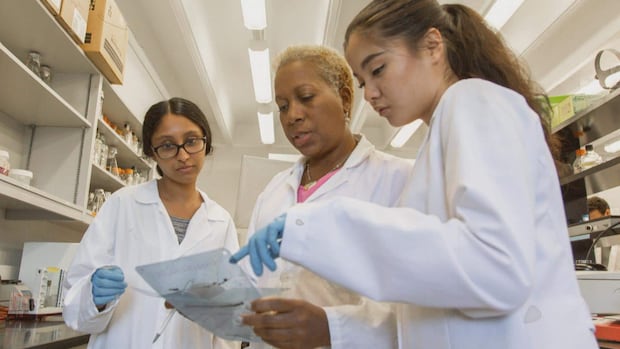
Juliet Daniel moved to Canada from Barbados in 1983 to pursue a medical degree but shifted her focus to cancer research following a personal loss. After spending 21 years as the sole Black female scientist at McMaster University, she expressed her desire to inspire Black Canadians ‘to strive for more than traditional categories of success.’
Roberts noted that Daniel was always proud of her Barbadian heritage and strived to give back to her community.
James recounted how Daniel assisted Barbados during the COVID-19 pandemic by linking its government with individuals who could provide vaccines, medical guidance, and resources.
Daniel’s impactful work garnered her several accolades, including being designated a Distinguished University Professor in 2025, McMaster’s highest honor for faculty. Her research has received over 6,400 citations.
In 2024, the Canadian Intellectual Property Office recognized Daniel as one of three Black Innovators in Research and Medicine.
Roberts expressed her hope that Daniel’s legacy will be permanently acknowledged, possibly through a tribute at McMaster or the naming of Barbados’s living lab in her honor.
“It’s disheartening that we often wait until someone is gone to celebrate their achievements,” she said.
Robinson articulated her desire to carry on Daniel’s legacy by prioritizing mentorship for her own students.

The gathering to celebrate Daniel attracted friends, colleagues, students, and mentees to the McLean Centre for Collaborative Discovery at McMaster University. (Jeffery Tram/CBC)
During the tribute on Monday, James shared a quote that she felt encapsulated Daniel’s outlook on life: “It’s better to light one small candle than to curse the darkness.”
James observed that the celebration included many whose lives were positively impacted by Daniel.
“She was like a candle that could ignite many others,” she remarked.
“As I looked around the room this afternoon, I noticed countless candles lit by Juliet, whose light will continue to shine on endlessly.”
For more narratives about the experiences of Black Canadians—ranging from anti-Black racism to uplifting stories within the Black community—explore Being Black in Canada, a commendable CBC project. Read more stories here.

(CBC)